
Cast iron can last for generations, but only if you clean it the right way. The goal is simple: remove food without stripping the seasoning, then dry the pan completely so it never rusts.
The 4-step daily routine
- Clean while the pan is still warm.
- Rinse with hot water and scrub off food.
- Dry completely, ideally over low heat.
- Rub in a very thin layer of oil.
What is “seasoning”?
Seasoning is a thin layer of oil that has been heated until it bonds to the iron, creating a natural, slick, protective coating. Every time you cook with fat, you add a little more. Good cleaning habits protect this layer.
Step-by-step: cleaning after everyday cooking
- Let it cool slightly. Clean while warm, not scorching hot. Never pour cold water into a very hot pan; sudden temperature changes can crack or warp cast iron.
- Scrape out food. Use a flat wooden spatula or a pan scraper.
- Rinse and scrub. Use hot water with a stiff brush or non-scratch scrubber. A small drop of mild dish soap is fine on a well-seasoned pan. Avoid long soaking.
- Dry immediately. Towel dry, then place the pan on a burner over low heat for a few minutes to evaporate any remaining moisture.
- Oil lightly. While warm, add a few drops of neutral oil (such as vegetable or canola) and wipe it over the surface with a paper towel. Then wipe again until the pan looks almost dry. Too much oil turns sticky.
- Store dry. Keep it in a dry cupboard. If you stack pans, place a paper towel inside to absorb moisture.
How to remove stuck-on food
- Salt scrub: sprinkle coarse kosher salt into the pan with a little oil and scrub with a folded paper towel. Salt acts as a gentle abrasive.
- Simmer method: add a little water, bring it to a simmer for 3–5 minutes, then scrape. Dry and oil afterward.
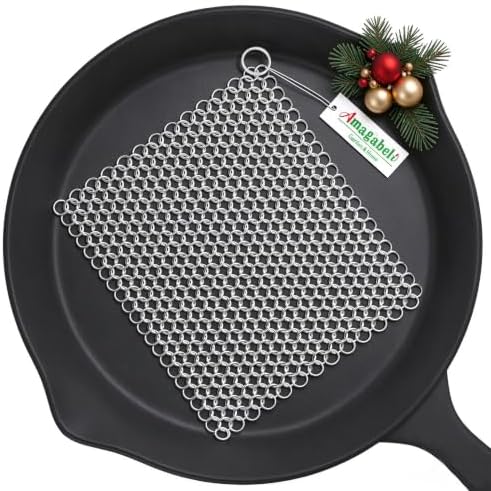
- Chainmail scrubber: a stainless steel chainmail scrubber removes stubborn bits without damaging good seasoning.
How to fix rust on cast iron
A little surface rust is common and easy to fix.
- Scrub the rusty area with steel wool or a stiff brush until you reach bare, clean metal.
- Wash with warm, soapy water, rinse and dry completely on the stove.
- Apply a thin coat of oil over the entire pan, inside and out, then wipe off the excess.
- Place the pan upside down in an oven at around 450–500°F (230–260°C) for one hour, with foil on the rack below to catch drips. Let it cool in the oven.
- Repeat the oiling and baking two or three times for a stronger coating.
What not to do
- Do not put cast iron in the dishwasher.
- Do not let it soak in water or air-dry in a dish rack.
- Avoid simmering very acidic foods (like tomato sauce) for long periods in a newly seasoned pan; they can wear down the coating.
- Do not store food in the pan.
Enameled cast iron is different
Enameled cast iron (with a glossy colored coating) does not need seasoning. Wash it with warm soapy water and a non-abrasive sponge. Avoid metal scouring pads, which can scratch the enamel.
FAQ
Can I use soap on cast iron?
Yes, a small amount of mild dish soap is fine on a seasoned pan. Avoid harsh scouring and long soaking.
Why is my cast iron sticky?
Too much oil was applied and not baked off. Heat the pan upside down in a hot oven for an hour, or scrub it lightly and re-season with a thinner layer.
Is cast iron worth buying?
For searing, roasting and baking, many cooks love it for heat retention and durability. Our guide Non-Stick vs Stainless Steel vs Cast Iron compares the options.