
This guide contains affiliate links. If you buy through them, we may earn a commission at no extra cost to you. Learn more.
A small kitchen does not have to feel cramped. Most of the problem is not size but layout: items stored far from where they are used, stacked so deep you cannot reach them, or kept even though you never use them. These ideas start free and only then suggest simple organizers.
Step 1: Declutter before you organize
Organizers cannot fix too much stuff. Empty one cabinet at a time and sort items into three groups: use weekly, use occasionally, rarely or never.
- Donate duplicates (most kitchens have too many mugs, plastic containers and utensils).
- Store rarely used items, such as holiday bakeware, outside the kitchen.
- Match every food container to a lid and recycle the orphans.
Step 2: Create zones
Store things where you use them: pots and pans near the stove, knives and cutting boards near the prep area, plates and glasses near the dishwasher or sink. This alone saves a surprising number of steps.
Free and low-cost ideas
- Keep only daily-use items on the counter.
- Store lids vertically, like files, instead of stacking them.
- Nest mixing bowls and measuring cups.
- Put rarely used items on the highest shelves.
- Use the space on top of the fridge for light, seldom-used items only.
Organizer ideas that make the biggest difference
Use vertical space in cabinets
- Shelf risers double usable space for plates, mugs and cans.
- Stackable bins keep snacks and packets together.
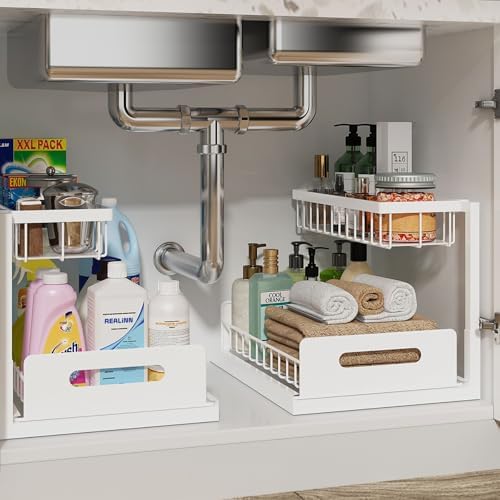
Make the under-sink cabinet usable
- A two-tier sliding organizer works around plumbing and puts cleaning supplies within reach.
- A tension rod across the cabinet lets you hang spray bottles by their triggers.
Use cabinet doors and walls
- Over-the-door or adhesive racks hold foil, wraps and cutting boards.
- A magnetic knife strip frees counter and drawer space.
- Wall rails with hooks hold utensils, mugs or small pans.

Organize drawers and the pantry
- Drawer dividers stop utensils turning into a jumble.
- Clear airtight containers for dry goods let you see what you have and stack neatly.
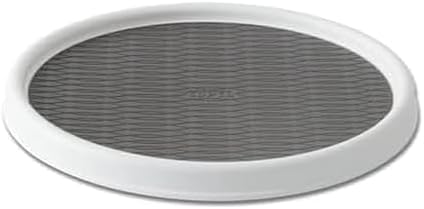
- A lazy Susan makes deep corner cabinets and spice collections easy to reach.
Measure before you buy
Measure the width, depth and height of each space, including pipes under the sink and the door frame. Many organizer returns happen simply because an item does not fit.
Keep it organized
- Do a quick 10-minute reset once a week.
- Follow “one in, one out” for gadgets and containers.
- Label bins and shelves so everyone in the household puts things back.
FAQ
What should I organize first in a small kitchen?
Start with the area you use most, usually the cabinet or drawer next to the stove or prep space. A quick win there makes the whole kitchen feel easier.
Are clear containers worth it?
For dry goods you use often, yes: you can see when you are running low, and uniform containers stack better than packets and boxes.